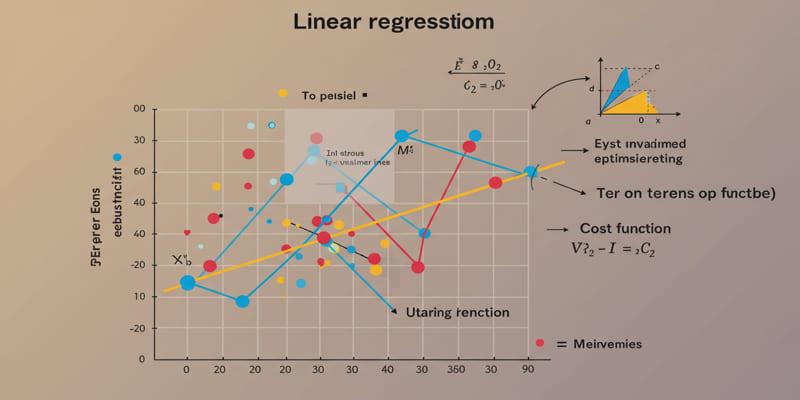
Multiple Linear Regression is an effective statistical tool that is applied to approximate a relationship that exists between a single dependent variable and a minimum of two or more independent variables. It is a more profound extension of simple linear regression, in which more than one predictor can be used, to give a more comprehensive understanding of the combined effect of different factors on an outcome. This technique assists in discovering connections, predicting patterns, and enhancing operations in the data analysis and SEO arena.
Regression analysis enables the analyst to estimate the contribution of a number of factors to the search engine ranking or traffic of a website, including keyword density, backlinks, site speed, and user interaction. This is a complex impact that should be understood by businesses that want to enhance their presence online and customize their marketing plans.
The Role of Multiple Linear Regression in SEO
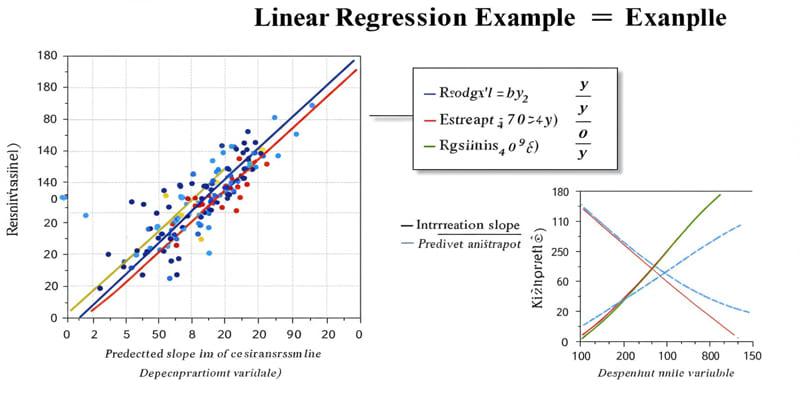
Multiple linear regression in SEO enables webmasters and marketers to forecast organic traffic depending on a number of factors that make SEO effective. An example is that a model could determine the effect of variables such as the quantity of keywords utilized in a page, the quality of the backlinks, and the load time of the pages on the number of visitors to the site.
With the help of regression, the professionals of SEO can make more accurate predictions of organic traffic and develop strategies that help influence the most critical variables. It results in an increased efficiency of SEO keyword research and decision-making. Combining these variables allows content creators and marketers to actively assess the success of their optimization actions on a real-time basis, due to the ability to predict organic traffic.
Key Components of Multiple Linear Regression
A multiple regression model is modelled to form:
Y=β0+β1X1+β2X2+⋯+βnXn+ε
- Y is the dependent variable (e.g., traffic or conversion rate).
- X1, X2, Xn are independent variables (predictors).
- β0 is the intercept.
- Β1,β2,…,βn are the coefficients representing the effect of each predictor.
- ε is the error term accounting for variability not explained by the model.
The formula aids in showing the contribution of each independent variable to the change in the dependent variable and the strength of the relationship between them.
Practical Applications in SEO
Traffic and Ranking Prediction
Multiple linear regression can help the SEO marketer estimate the influence of various SEO variables on the overall traffic of the website, as well as the ranking of the site in search engines; variables could be: keyword density, backlink quality, page speed, etc. As an illustration, when the website owner is interested in forecasting organic traffic, he/she may create a model based on past traffic history and site statistics such as backlinks, frequency of keywords, and other user engagement indicators, such as time on page.
Maximizing Keyword Strategy
When SEO keyword research data is incorporated into the regression model, the marketer can learn the actual keywords or phrases that generate traffic. As compared to guesswork, the analysis offers quantitative support on the effectiveness of keywords that can be used to prevent over-optimization or overuse of low-impact keywords.
Case Example
Consider the owner of a site who gathers data on a monthly basis on:
- Number of backlinks
- Average page loading speed
- Number of targeted keywords on non-overlapping pages
- Average user dwell time
Monthly organic traffic is the outcome variable. An analysis of this data with a regression model yields coefficients of the extent to which the organic traffic varies with a change in each factor. When the coefficient of backlinks is 50, that implies that with every extra backlink, there are an extra 50 visitors, assuming all the other factors are held constant.
Advantages of Multiple Linear Regression in SEO
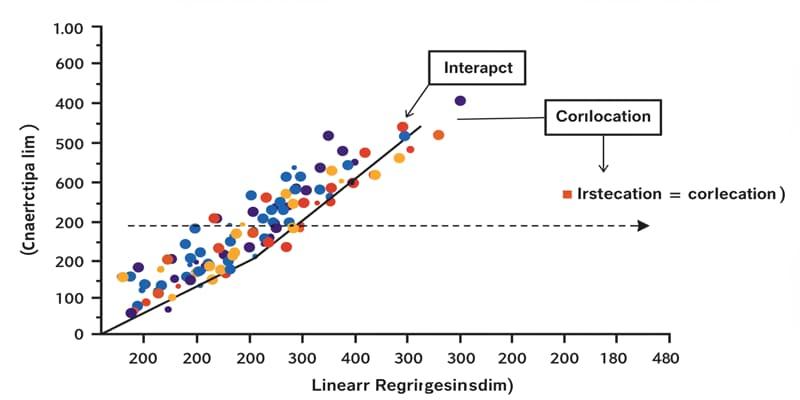
Data-Driven Decisions: This derives value from the contribution of various SEO factors so that marketers can focus on efforts that have statistical significance.
- Predictive Power: It facilitates making predictions of future organic traffic, depending on the present inputs of the SEO.
- Understanding of Keyword Performance: Adding the information of the SEO keyword research to the model assists in identifying the keywords that resulted in significant traffic.
- Opportunities for optimization: Recognizes falling returns or pernicious effects of particular SEO practices that may not be easily recognized.
- Better ROI: Attention to the most effective SEO actions will save time and money.
The steps to undertake to perform a Multiple Linear Regression analysis of SEO.
Step 1: Collect Data
Gather data on potential predictor variables such as:
- Keyword density
- Backlink count and quality
- Page speed
- Content length
- Internal linking structure
In addition, gather the values of the dependent variable, such as monthly organic traffic or rankings.
Step 2: Prepare Data
Preprocess and clean the data in such a way that we can eliminate noise or inconsistencies. Normalize, maybe, and look for outliers that can bias the analysis.
Step 3: Build the Model
Input a dataset using statistical software or programming languages like R, Python, or tools like Excel, and run a multiple linear regression. The software will give out coefficients, level of significance (p-value), and goodness of fit (R-squared values).
Step 4: Interpret Results
Review the coefficients to see which predictors can most affect SEO results, such as predicting organic traffic. Low p-values (usually below 0.05) are considered to be statistically significant.
Step 5: Apply Insights
Maximize your SEO program by concentrating on the influential variables. To illustrate, when the page speed is strongly related to it, then optimizing it might result in increased organic traffic.
Challenges and Considerations
Multicollinearity: The predictors may be correlated among themselves, and this may give distorted estimates of the coefficient. Such techniques as variance inflation factor (VIF) analysis can assist in identifying and rectifying this.
- Non-linear Relationships: There are non-linear relationships between some SEO factors, e.g., excessive keyword stuffing has a negative effect on rankings, even though keywords are significant. Other forms of modeling or transformations can be required.
- Data Quality: The accuracy of the model will be based on high-quality, consistent data. Lack of good or accurate data reduces reliability.
- Overfitting: An overabundance of variables can lead to noise in fitting the model instead of the actual relationship, and this lowers the level of generalizability.
- Ordinal vs Interval Data: Site ranks are ordinal and do not necessarily satisfy the conditions of linear regression, so caution is needed when modeling the ranks.
Improving SEO with Tactical Keyword and Regression
Incorporation of SEO keyword research and multiple linear regression will propel your knowledge of the effect that certain keywords can have on site performance. A list of the possible terms to address is available through a keyword research, but regression assists in quantifying the real influence of each keyword on such measures as organic traffic.
With such combined insights, digital marketers are able to:
- Determine high-impact keywords that actually promote rankings and traffic.
- Avoid overloading with keywords by getting to know the best density of keywords.
- Regression predictions made using keywords predict the outcome of alterations to the keywords and their impact on the performance of the sites.
- Allocate resources on content creation around keywords with the highest ROI.
Conclusion
The ability to master the analysis of multiple linear regression is one of the skill benefits that no one would want to lack when it comes to improving their SEO techniques. This statistical analysis tool gives understandable, actionable information on the interaction of various SEO parameters and on the influence of these parameters on the overall site success. With the power of regression analysis and excellent search engine optimization research, companies can make more informed, fact-based decisions that can speed up organic development and provide optimal online exposure.