When people think of Hugging Face, what usually comes to mind is the Transformers library. And while it deserves the praise for making deep learning models more accessible, there's a quieter part of the ecosystem that deserves just as much attention: inference solutions. These tools do more than run models. They aim to make deploying and scaling machine learning as simple as possible—even for those who aren’t knee-deep in MLOps.
In this article, we’re going to focus on how Hugging Face enables inference, from hosted APIs to more advanced self-managed setups. You’ll find that there's something for almost every use case, whether you're working on a hobby project or need to scale thousands of requests per second. No fluff—just practical details, how things work, and what you can actually do with them.
What Is Model Inference and Why Does It Matter
Before we go into Hugging Face’s tools, let’s make sure the concept of inference is clear. In simple terms, inference is the stage where a machine learning model gets put to use. You've trained the model; now you want to feed it new data and get results. Whether you're asking a question to a language model, classifying images, or translating text, you're performing inference.
And here's where most of the real-world challenges show up. How do you serve predictions with low latency? How do you do it at scale without losing control of costs? What happens when your model crashes under traffic spikes?
This is what Hugging Face's inference stack tries to address—not just running models, but running them reliably, efficiently, and with minimum effort on your end.
Exploring Hugging Face's Inference Offerings
Option 1: Hosted Inference API
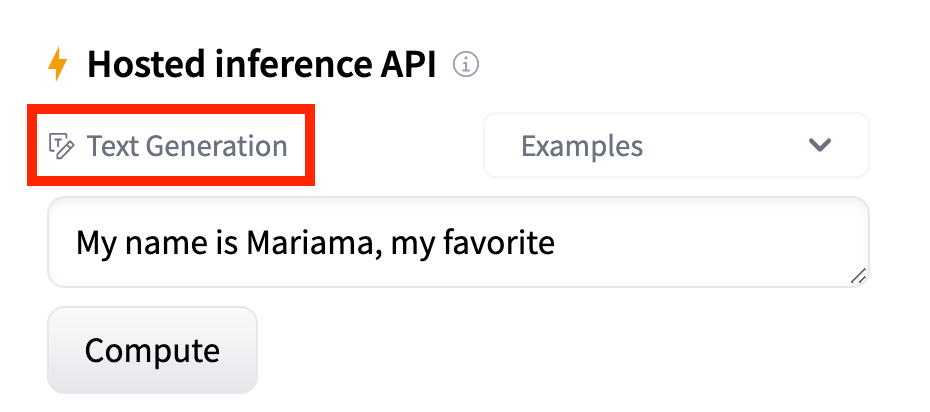
Simple, Clean, and Managed
The Hosted Inference API is the most hands-off option you’ll find on Hugging Face. It’s the route most people take when they need quick results and don’t want to deal with setting up their own infrastructure.
You select a model, hit the "Deploy" button, and get an API endpoint. That’s it. Hugging Face handles everything behind the scenes—hardware, scaling, maintenance. You send HTTP requests, you get responses.
It supports thousands of models directly from the Hub—text generation, image classification, translation, and audio transcription. Even custom models are welcome if you upload them to your private space.
What You Get
Automatic scaling: You don’t have to think about how many machines you need.
Security features: Token authentication is built in.
Consistent latency: Results come back fast, especially for lightweight models.
It’s a great option for testing ideas, building MVPs, or even production setups—if you’re okay with some trade-offs on flexibility and price.
Option 2: Inference Endpoints
Your Model, Hugging Face’s Hardware
If you need more control but still want a hosted solution, Inference Endpoints might be a better fit. This feature allows you to deploy any model from the Hub (or a private model) as a production-grade API. Unlike the Hosted Inference API, here you get to pick your hardware, region, and scaling policy.
That’s helpful if your application needs GPUs or has to comply with certain data residency rules.
Key Features
Custom hardware selection: From CPU to A100 GPUs.
Auto-scaling: You can configure min and max replicas.
Private models support: Keeps things secure and confidential.
VPC peering (for Enterprise users): Useful for private networking needs.
You still don’t manage the infrastructure, but you get more say in how it behaves. This makes Inference Endpoints ideal for production workloads where latency, consistency, and privacy matter.
Option 3: Hugging Face Text Generation Inference (TGI)
Built for LLMs at Scale
Text Generation Inference—also known as TGI—is a separate open-source server designed specifically for running large language models like LLaMA, Mistral, Falcon, and others. It's optimized for one job: serving text generation workloads efficiently.
TGI supports continuous batching, GPU offloading, quantized models, and other tricks that help reduce both memory usage and latency.
If you're working with models that have billions of parameters, standard hosting solutions won’t cut it. TGI is where you look when you want to deploy these heavyweights efficiently—either on your own infrastructure or inside Hugging Face's managed service.
What Sets It Apart
Continuous batching: Groups requests together to save compute cycles.
Token streaming: Lets you display generated text as it appears, not after it's done.
Quantization support: Run models in lower precision for speed and lower memory use.
Production-ready server: Built in Rust, optimized for performance.
While the setup is more involved, the performance gains are real, especially when you're pushing high-throughput, low-latency workloads.
Option 4: Hugging Face Inference on Amazon SageMaker

Full Customization on AWS
If your team is already working within AWS, this option will feel like home. Hugging Face provides containers preloaded with Transformers and other key libraries, and you can deploy them as endpoints using Amazon SageMaker.
It’s a good choice when you need full control but want to avoid managing dependencies or setting up Docker from scratch.
You get access to SageMaker’s full suite of tools—auto-scaling, monitoring, logging, and version control—while benefiting from Hugging Face's deep model support.
Notable Benefits
- Integration with AWS IAM and security tools
- Support for distributed inference
- Built-in monitoring through SageMaker Studio
- Custom scripts and entry points
This setup suits teams with complex deployment pipelines or regulatory requirements. It’s also useful for enterprises looking to align machine learning operations with their existing cloud strategy.
Wrapping Up
Hugging Face doesn’t just offer models—it gives you the tools to actually use them in production. Whether you want the ease of a plug-and-play API, the reliability of a managed endpoint, or the fine-grained control of custom infrastructure, there’s something in their stack for you.
Each inference solution serves a specific kind of need. Hosted Inference API gets you started fast. Inference Endpoints strike a balance between flexibility and convenience. TGI is for scaling large language models. And SageMaker support covers those who want deep integration with AWS.