Generative adversarial networks (GANs) are transforming both machine learning and content creation. These models consist of two neural networks—a generator and a discriminator—that learn from real data to produce synthetic outputs. They now perform tasks that once required complex human effort. GAN applications are rapidly expanding across both technical and creative fields. They are used to simulate virtual environments, enhance medical imaging, and improve visual realism.
GANs show promise far beyond their original use cases as AI continues to evolve. They are especially valuable in data-scarce environments due to their ability to generate realistic outputs. These technologies are driving breakthroughs across industries, with increasing real-world adoption. Researchers continue to explore new GAN use cases, which carry wide-ranging implications.
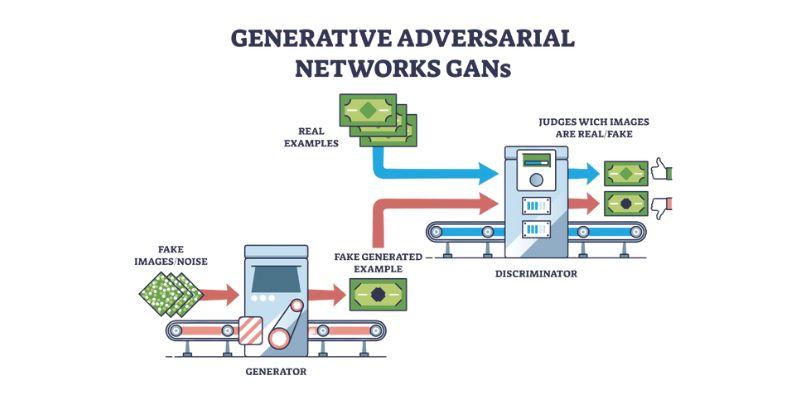
Image Generation and Enhancement
The field of image generation is undergoing a revolution thanks to GANs. They learn from thousands of real images to produce photorealistic visuals. Developers and artists utilize these models to create high-resolution textures, enhance images, and generate virtual characters. By adding missing visual details, GANs can restore old or low-quality photos. They are also used in super-resolution techniques, making blurry images appear sharp and defined.
This tool saves media companies time when it comes to intricate editing. Fashion brands utilize GANs to replicate product photo shoots digitally. These generative adversarial network applications increase creative output while reducing costs. Content creators are now utilizing GANs for creating deepfake videos, album art, and marketing visuals. GAN-based image enhancement promises quicker, more accurate results on digital and entertainment platforms.
Medical Imaging and Diagnostics
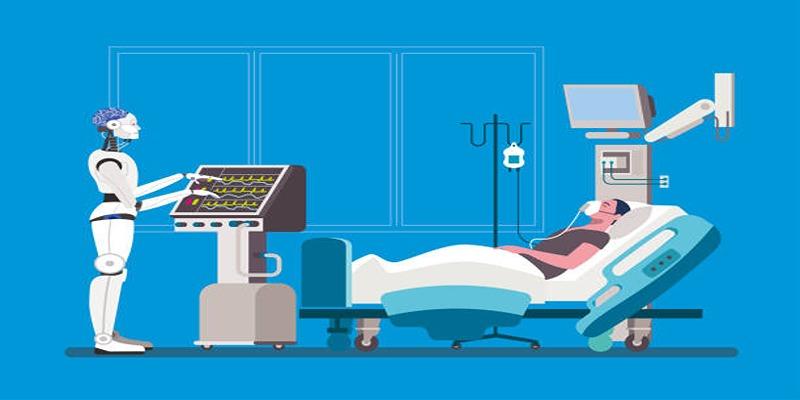
In healthcare, GANs are reshaping how doctors analyze medical images. These models help to improve X-ray, CT, and MRI scans. GANs enhance resolution, reduce noise, and even replicate data in situations where there is a shortage of medical samples. By doing so, they help radiologists detect diseases faster and more accurately. Researchers use generative adversarial network use cases to detect tissue anomalies or forecast the growth of tumors.
Additionally, GANs aid in data augmentation by producing artificial scans that are used to train other AI models. In rare disease research, where actual data collection is challenging, this is essential. GANs are utilized in medicine discovery to generate molecular structures that meet specific medical requirements. By providing thorough and superior inputs, these promising GAN-based technologies contribute to the development of medicine. Globally, these advances lead to better patient outcomes and more precise diagnostics.
Art, Music, and Content Creation
New kinds of creativity in writing, art, and music are being made possible by GANs. To create original artwork, artists teach GANs realistic or abstract styles. Musicians use them to combine different genres or styles to create new compositions. Writers use GANs to create controlled tone and structure in their drafts, scripts, and poetry. While increasing creativity, these applications of generative adversarial networks help creators save time and effort. GANs are used in advertising to create audience-specific social media visuals.
Some tools even create ad layouts or write scripts for videos. Without the need for manual modeling, game developers can easily create textures and landscapes. Using AI-generated environments, GANs help create compelling narratives. These developments demonstrate the promise of GAN-based technologies, which combine automation and creativity in a novel way. Professionals can scale production while preserving artistic integrity thanks to this combination.
Face Synthesis and Deepfake Technology
One of the most sophisticated uses of GANs is face synthesis. These models are capable of producing realistic-looking fake human faces. Social media companies use them to anonymize users in privacy-related applications. GANs are occasionally used by law enforcement to create reconstructed or age-progressed images of individuals. Deepfake technology, which produces videos with voice or facial replacements, is also powered by GANs.
Although controversial, some uses—such as dubbing movies or digitally recreating deceased actors—can be ethically justifiable. For GAN-based face synthesis tools to produce believable results, they need little actual input. It speeds up the process of creating training datasets. Businesses investigating the use cases of generative adversarial networks (GANs) continue to refine detection tools to identify deepfakes. Promising GAN-based technologies in this field can help with educational simulation, data privacy, and creative projects if they are carefully monitored.
Fashion, Retail, and Virtual Try-Ons
Retailers are using GANs to improve the customer experience. GAN-powered virtual try-on tools allow users to view clothing on virtual avatars. For realistic fitting visuals, these systems adjust lighting, fabric texture, and body type to provide a more accurate representation of the user’s appearance. Fashion designers use AI-generated samples to test color palettes and outfit combinations. These generative adversarial network applications expedite design cycles and reduce waste.
E-commerce brands use GANs to create product images without the need for extensive photo shoots. They use AI to mimic backgrounds, accessories, and even poses. Using uploaded images, GAN-powered visual search tools help customers find related products. Promising GAN-based technologies improve personalization by combining visual flair with data-driven accuracy. Accurate product visualization and AI-assisted styling enhance customer engagement and decrease return rates for retail businesses.
Synthetic Data for AI Training
When AI models are trained on small or skewed datasets, they frequently fail. That is addressed by GANs, which generate realistic-looking yet synthetic training data. These synthetic datasets replicate real-world distributions without disclosing private data. In domains where real data is scarce or sensitive, such as finance, healthcare, and autonomous driving, GANs are helpful. They assist in simulating driving conditions, medical records, and credit transactions.
GANs are used by developers to balance class distributions, particularly in situations where specific events are uncommon. To enhance algorithm learning in fraud detection, GANs mimic patterns of both authentic and fraudulent behavior. These generative adversarial network use cases improve the efficiency and ethics of AI training. This scalability is advantageous for industries that need reliable models. Training smarter, safer systems will be greatly aided by promising GAN-based technologies as data privacy becomes increasingly important.
Conclusion:
From experimental models, generative adversarial networks have evolved into effective and practical tools for various applications. They have an impact on fields like commerce, medicine, and the arts. The applications of generative adversarial networks continue to deliver efficiency and innovation as the demand for AI increases. GANs are becoming indispensable in various fields, from enhancing diagnostics to generating synthetic data. With the emergence of new generative adversarial network use cases, industries will leverage their potential to develop more intelligent and innovative solutions that satisfy intricate digital requirements.