Not every type of data fits neatly into rows and columns. Some information is better understood when looked at in terms of how things connect. Social networks, recommendation systems, and biological networks — all of these are examples where the relationships between items are just as important as the items themselves. That's where graph machine learning comes into play.
Unlike traditional machine learning models that focus on isolated data points, graph-based models learn from connections. They uncover patterns that standard methods would miss entirely. If that sounds a little abstract right now, don’t worry. Let’s break it down.
What Is a Graph, Exactly?
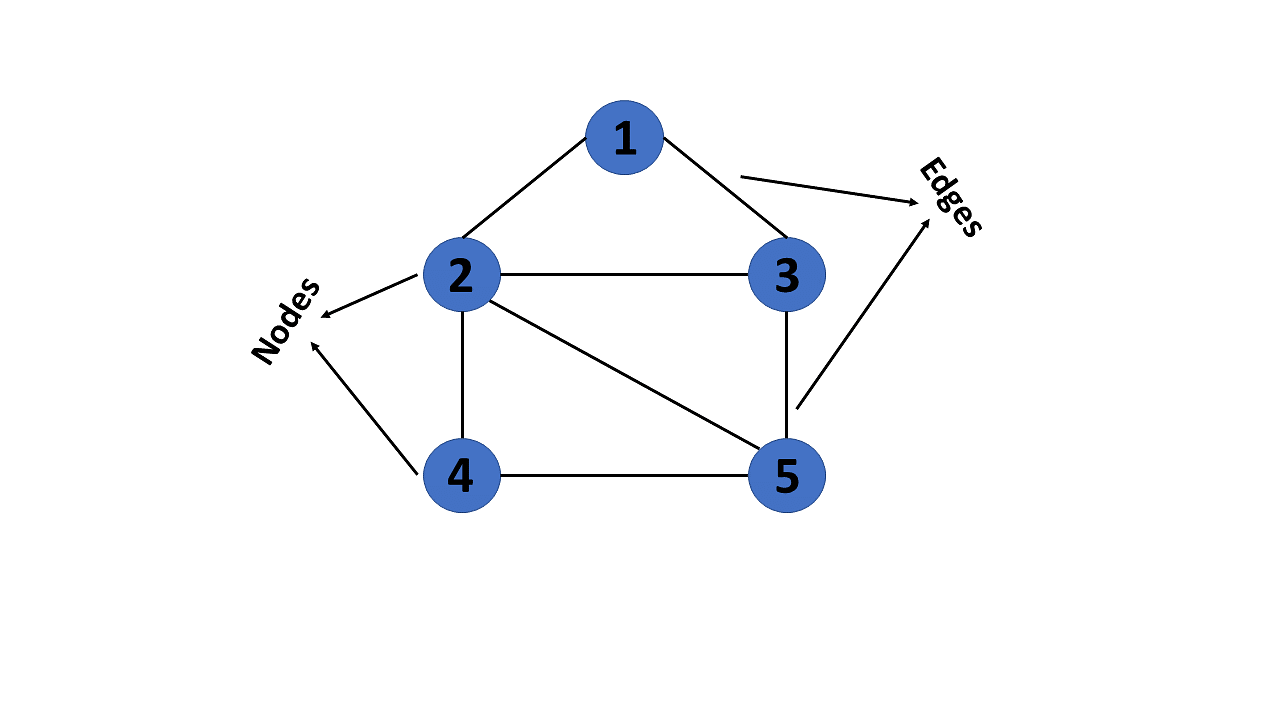
By way of contrast, a graph isn't something you'd sketch on a piece of paper with a line and a few axes. It's a framework composed of nodes (also vertices) and edges (the relationships between nodes). Every node is an entity—a user, perhaps, or a product, or a protein. Every edge is a relationship, such as a friendship, a purchase, or a reaction.
The reason graphs are so strong is that they represent real-world data in its natural form. Life isn't a list of things—it's a web of relationships. Most traditional algorithms tend to overlook this factor. Graph machine learning capitalizes on it.
How Graph Machine Learning Actually Works
Graph machine learning is all about letting models learn from the structure of the graph. Instead of just feeding in features like "user age" or "movie rating," you let the algorithm understand who is connected to whom, and how strongly.
Let’s go over the main steps to see how that happens.
Step 1: Represent the Graph with Data Structures
The first step is representing the graph in a way that algorithms can use. Usually, that means using something like an adjacency list or adjacency matrix. But you don’t stop there. You also need features for the nodes or edges—numbers that describe what they are.
For example:
- A user node might have features like location, age, or account activity.
- An item node (say a book or a product) might have features like category or price.
- An edge might hold data about how often two nodes interact.
This setup is where everything starts.
Step 2: Apply Graph Neural Networks (GNNs)
Graph Neural Networks are the core of most modern graph machine learning. Here’s the big idea: every node updates its understanding of the world by looking at its neighbors. And this process repeats multiple times, letting information spread throughout the graph.
Each round of updates is called a layer. At every layer, a node looks at its neighbors and combines what it learns from them into its own state.
So, over time, even distant nodes can influence one another. This is useful because, in real-life graphs, things are rarely isolated. A person might be influenced by a friend of a friend of a friend. GNNs let that influence travel.
Step 3: Train the Model
Once the graph structure is set and the GNN is defined, you move on to training. This part works a lot like any machine learning problem—you pick a task (like predicting the rating a user might give a movie), define a loss function, and use data to adjust the model.
The big difference is that the model uses not only the features of each node but also how that node connects to others.
Step 4: Make Predictions
After training, you can make predictions in various ways:
- Classify nodes (Is this account fraudulent?)
- Predict edges (Will these two people become friends?)
- Generate entire subgraphs (What does this molecule look like?)
The power comes from the fact that you're not treating data points as isolated. Instead, you're asking what patterns emerge when things are linked together.
Where It’s Being Used
Graph machine learning is already making a big difference in real-world problems. Below are just a few places where it’s proving valuable:
Recommender Systems
When companies want to suggest a product or video, they can use graph-based models to see which users are connected by behavior. So instead of just saying “you watched this, so here’s something similar,” the model might say “people like you who also liked this tend to also like that.”
This gives better results than just matching items by keywords or tags.
Fraud Detection
In networks with millions of transactions, fraudsters often leave behind subtle traces. They might create rings of fake accounts or engage in patterns that are hard to catch individually but stand out when looked at in terms of connections. Graph-based methods can catch these patterns more effectively.
Drug Discovery
Biological systems are naturally structured as graphs—proteins, molecules, and genes all interact with each other in networks. Graph machine learning lets scientists predict how a new compound might behave, based on how it fits into known biological pathways.
Social Network Analysis
Understanding how influence spreads through a group, or how communities form and evolve, is exactly the kind of problem graph models handle well. Whether it's identifying opinion leaders or detecting misinformation, the key is often in the connections.
Core Types of Graph Machine Learning Tasks
There are different kinds of tasks that graph models can tackle. Each one fits a specific kind of problem.
Node Classification
Here, you're predicting something about a node. For example, given a user and their connections, can you predict their interests?
Link Prediction
This is about forecasting connections. You might ask: Will two users interact? Will a product be purchased again? Models look at the existing structure and infer new or missing links.
Graph Classification
Instead of working on individual nodes or links, this looks at the graph as a whole. It’s common in chemistry, where you might want to classify a molecule as effective or not for a specific condition.
Wrapping It All Up
Graph machine learning opens up possibilities that traditional models just can't handle. It gives structure to what would otherwise look like noise. By using the relationships between data points—not just the data itself—graph-based models give you a deeper, richer understanding of your data.
Whether you're building a smarter recommendation engine, fighting fraud, or searching for new medicines, the idea stays the same: the connections matter. And graph machine learning is how you make those connections count.